When most people picture gothic decor, they imagine a room packed to the ceiling: black lace on every surface, skulls on every shelf, and not one inch of empty space. It can be fun, but it can also feel more like a Halloween store than a home.
The gothic homes I love are different. They feel quiet. A little mysterious. Like a room in an old house where a story is waiting to happen. The secret isn’t more stuff. It’s choosing a few meaningful pieces and giving them room to breathe.
Here’s how to bring that calm, moody gothic feeling into your own home.
1. Start With a Calm Base
Every gothic room needs a backdrop that lets the darker pieces shine. You don’t have to paint every wall black. Choose one main color and build around it:
Warm stone and plaster neutrals for an old-world, castle-like feel
Charcoal or soft black for a modern, dramatic look
Deep plum, wine or forest green for something romantic and rich
Keep your largest surfaces (walls, floors and bedding) simple. They’re the canvas, not the art.
2. Decide: Traditional or Modern Gothic?
Gothic style comes in two moods, and knowing which one speaks to you makes every choice easier.
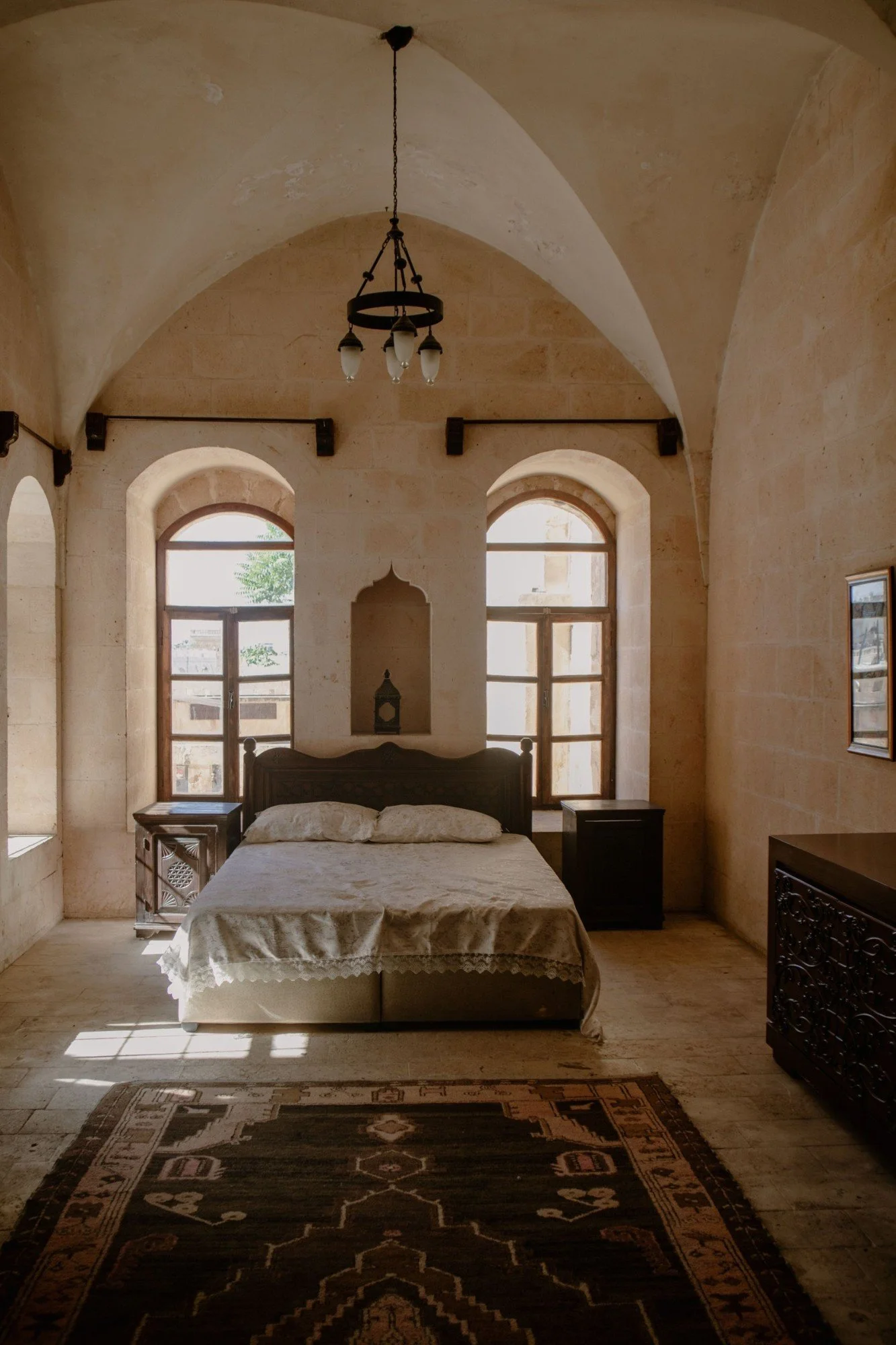
Traditional gothic leans on history: stone walls, arched windows, carved dark wood, iron chandeliers, heavy fabrics and antique rugs. It feels like a room in an old manor or a monastery.
Modern gothic keeps the mood but cleans up the lines: dark painted walls, a simple black metal bed, crisp white or cream linens and one or two dramatic pieces. Less ornament, more atmosphere.
You can also mix them. A modern room with a single antique candelabra can be the most striking of all.
3. Play With Contrast
Contrast is what makes a gothic room feel dramatic without feeling crowded. Think of pairs:
Black iron against white plaster walls
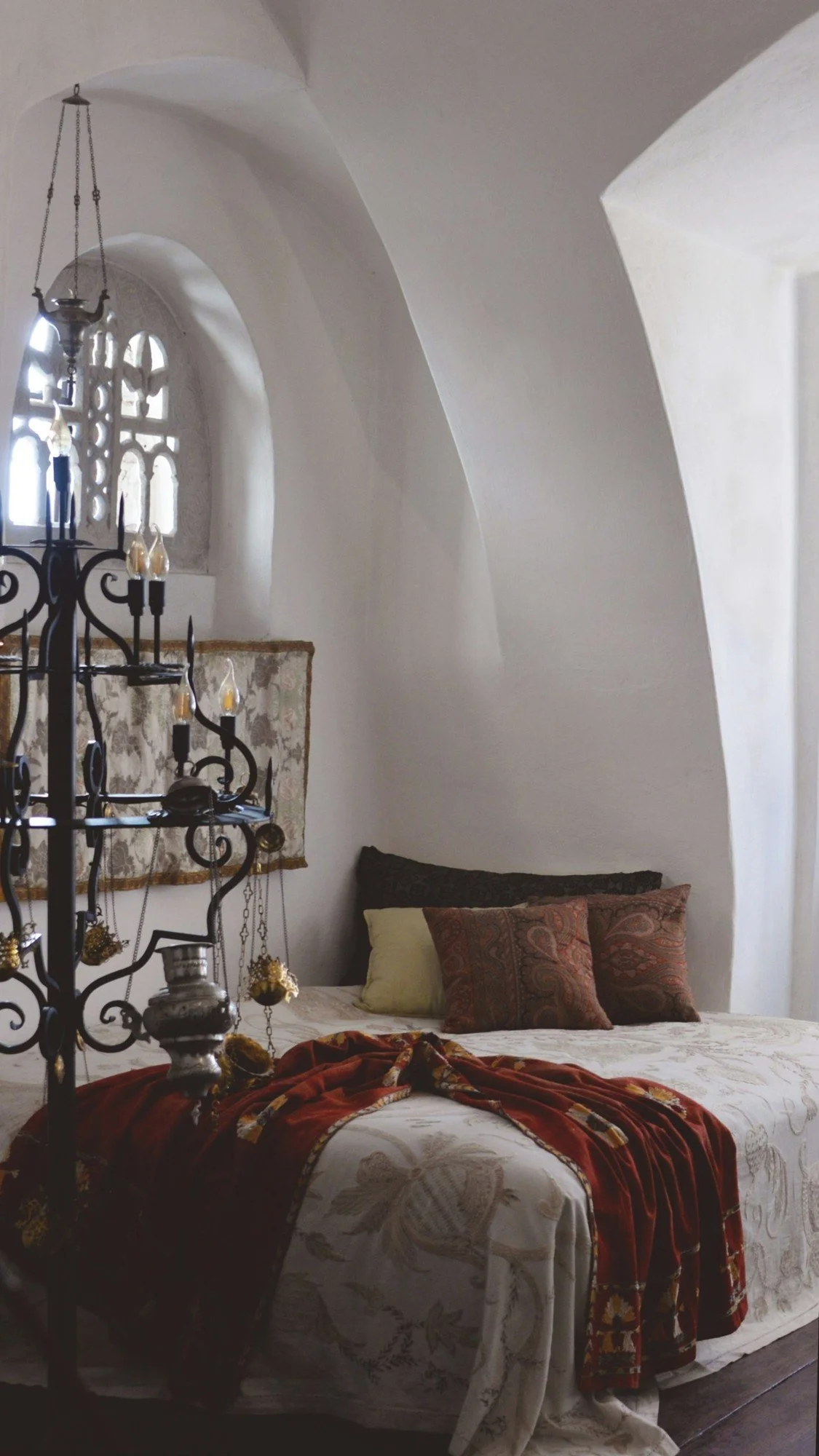
Deep red or plum velvet against cream linen
Dark carved wood against pale stone floors
Warm candlelight against cool shadows
One strong contrast in a room can do more than a dozen decorations.
4. Choose a Few Statement Pieces
Instead of filling every shelf, pick two or three pieces that set the mood and let them stand alone:
A wrought iron candelabra or chandelier
An antique mirror with a tarnished gold or black frame
One large piece of art: a moody landscape, a botanical print or an old portrait
A velvet headboard or a canopy bed
If you’re unsure, start with lighting. A single beautiful candelabra changes a room instantly.
5. Go Antique Shopping for Pieces With a Past
Some of the best gothic decor isn’t found in a big-box store at all. It’s waiting on a dusty shelf at an antique shop, flea market or estate sale. Pieces with a history bring a feeling to a room that brand-new decor simply can’t.
Here are a few things to keep an eye out for:
Brass, silver or iron candlesticks (mismatched ones look wonderful grouped together)
Old mirrors with softly clouded or “foxed” glass
Antique picture frames, even empty ones, hung on a dark wall
Leather-bound books for a shelf, a nightstand or a stack beside a candle
Apothecary bottles and glass jars for dried flowers or herbs
Lace, velvet and old linens for pillows, table runners or a throw at the foot of the bed
Skeleton keys, cameos and small curiosities to tuck into a dish or a shadow box
A few tips for antique shopping:
Go with a color palette in mind so you don’t come home with a little of everything.
Look past dust and tarnish. A little polish (or none at all) is part of the charm.
Check furniture for wobbles, cracks and loose joints before you buy.
Ask the seller about a piece’s history. Sometimes the story is the best part.
Bring home one or two special finds at a time, not a whole carload.
Mixing even one or two antiques into a modern room gives it soul, and you’ll have a story to tell every time someone asks about it.
6. Layer in Texture
Gothic rooms feel rich because of texture, not quantity. Layer soft and heavy materials: velvet and lace, linen and wool, worn leather and cool stone. Add dried roses, eucalyptus or lavender in a simple vase for a natural, slightly faded touch.
7. Add One Meaningful Object
Every gothic room deserves one object with a little folklore behind it. In old seaside homes, families hung glass witch balls in their windows. These shimmering spheres were believed to catch ill fortune and keep watch over the household.
A sea witch ball filled with black sea salt, rosemary and vervain makes a beautiful, meaningful accent in a window or above a bed, and it brings a story into the room.
Shop my handmade sea witch balls on Etsy
8. Light It Like a Story
Lighting is the heart of a gothic room. Skip the bright overhead light in the evening and layer warm, low light instead: candles (real or flameless), a dimmable lamp, string lights hidden behind sheer curtains, or a candelabra on a dresser. Shadows are part of the design.
9. Keep It Uncluttered
The final secret is restraint. A few simple rules help:
Group small objects in threes rather than spreading them everywhere.
Leave some empty wall and shelf space on purpose. It makes your favorite pieces stand out.
Before you add something new, ask whether it adds mood or just adds stuff.
A calm gothic home should feel like a deep breath at dusk, not a cabinet of curiosities about to burst.
Shop the Look
Step Into the Underrealm
If you love rooms like these, you’ll feel right at home in my gothic stories. On Tales From the Underrealm, I write The Necromancer’s Tide, a serial about a waterway town where the tide no longer answers to the moon, where old houses keep their secrets and a witch ball in the window may be the only warning you get.
Read Chapter One free on Tales From the Underrealm
What’s the one antique you’d love to find for your gothic home?
